

Solo Developer Launches BigBlueBam Public Beta: Open-Source, 20-Application Work Operating System
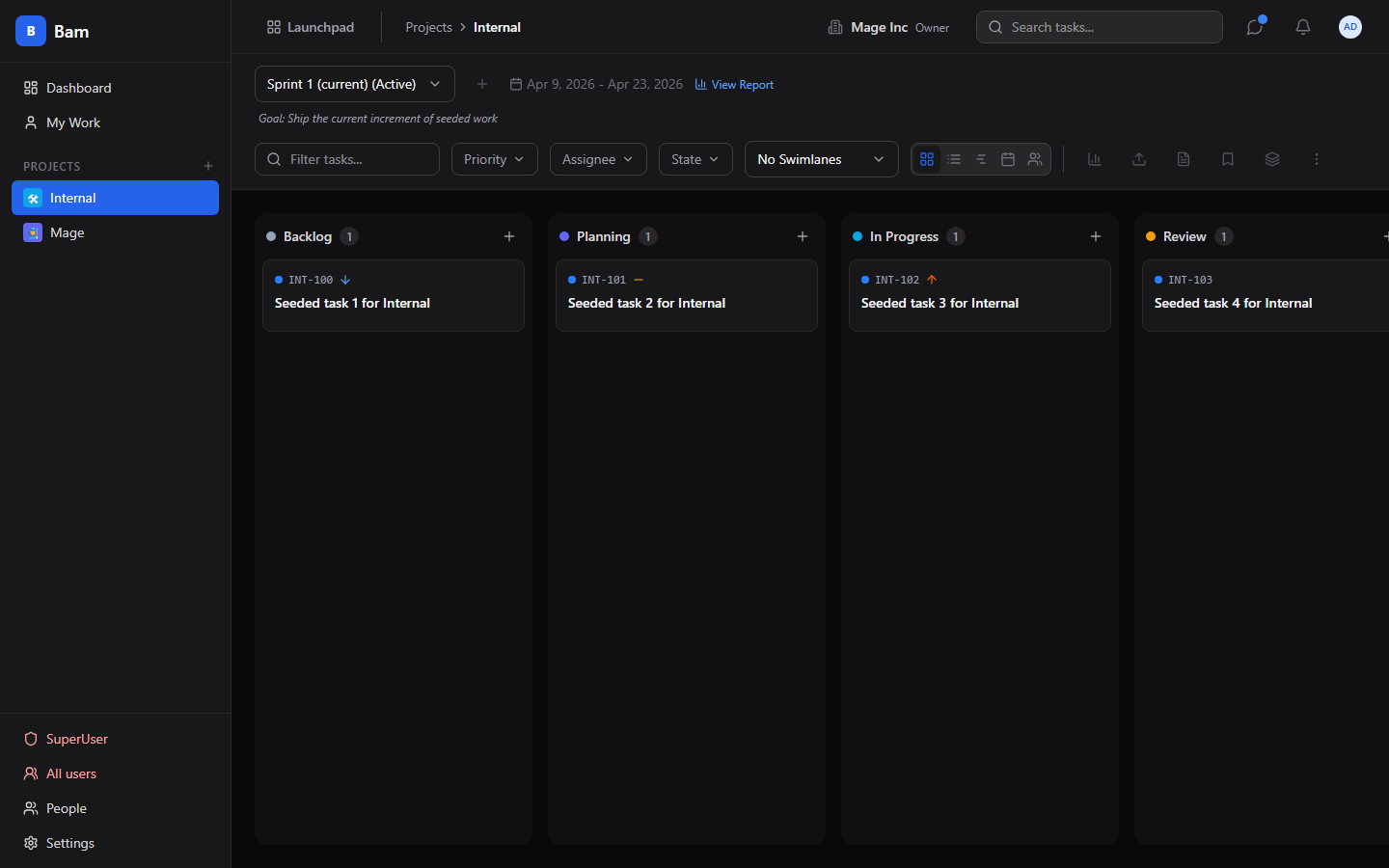
BigBlueBam started with a Kanban Board
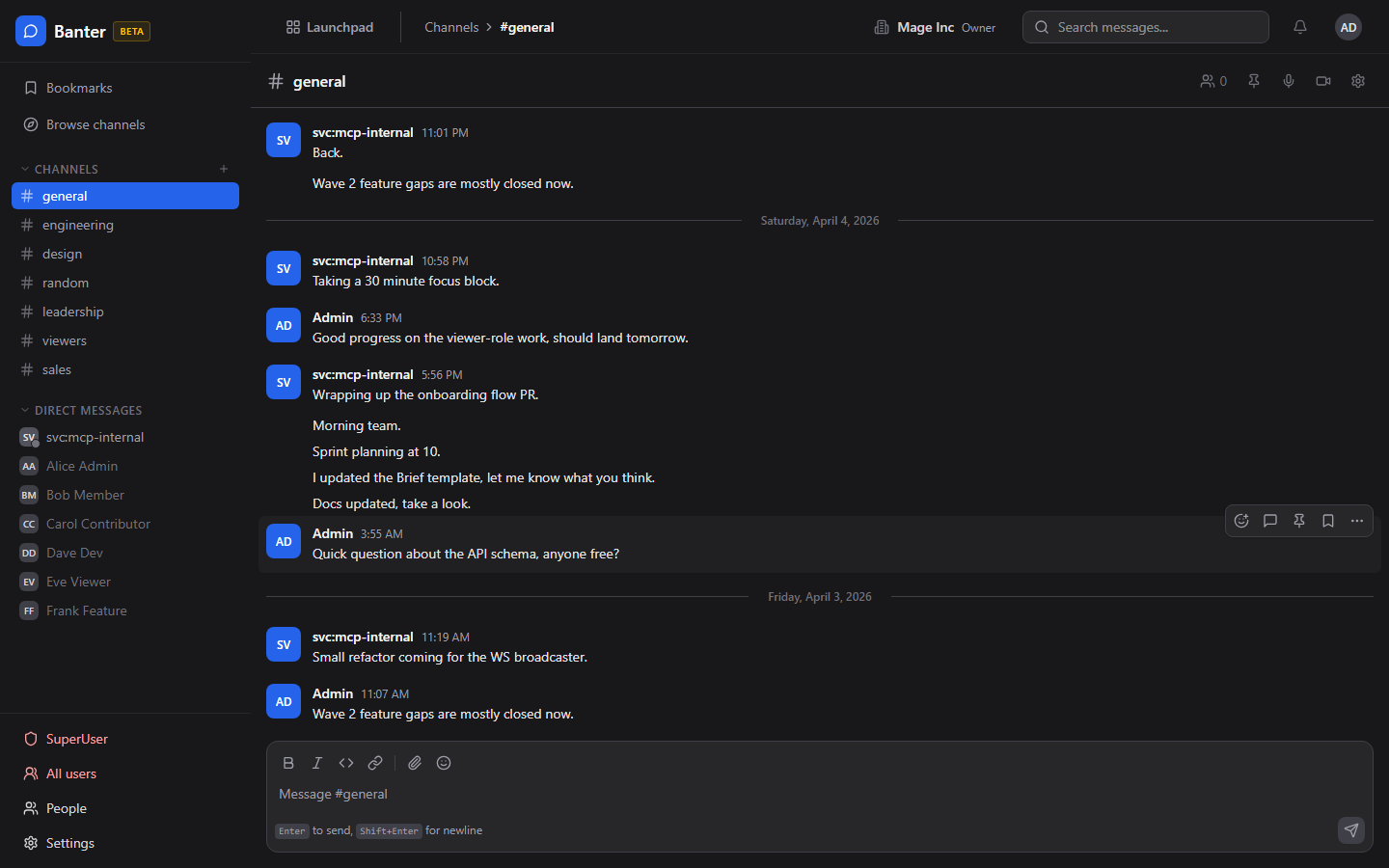
Banter provides an in-house messaging system with channels and direct messaging
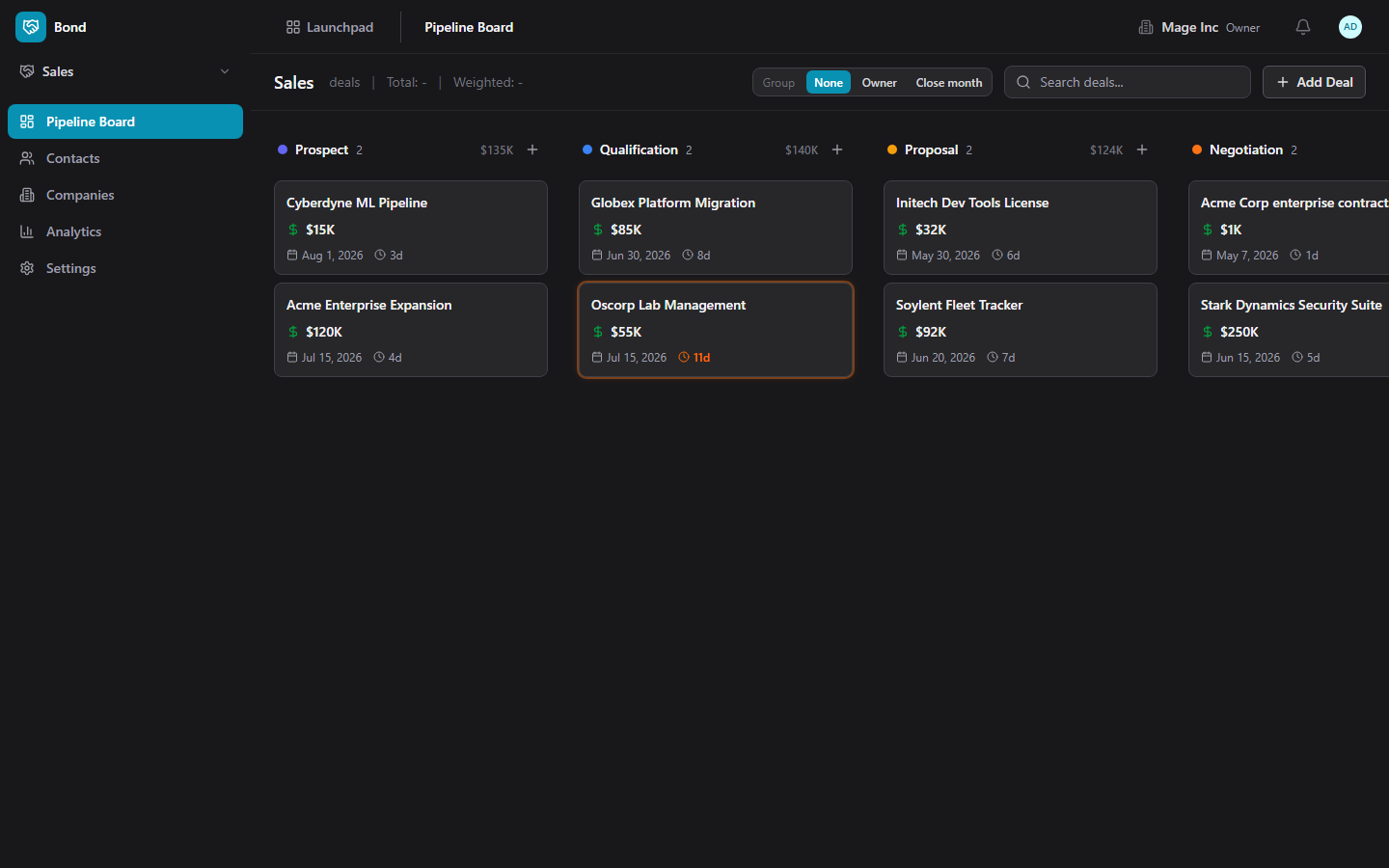
BigBlueBam's Bond app provides familiar CRM features
Eddie Offermann, a thirty-year software veteran, releases an MIT-licensed, AI-native work suite built for human-AI teams.
BigBlueBam is MIT-licensed, self-hostable on a single commodity Docker host, and designed from the outset to treat AI agents as first-class users alongside human staff. It ships with a Model Context Protocol server exposing over 340 tools to AI agents, governed by the same role-based access control system that governs the humans on a team.
A Suite, Not a Collection
Most enterprise work software is sold as a collection of separate products that exchange data through APIs and integrations. BigBlueBam was designed as a single suite from day one. Any action taken in one application — a task created, a document edited, a customer contacted, an invoice sent — is immediately visible, searchable, and automatable from every other. A human or an AI agent working in any corner of the suite sees one coherent picture of the organization's work.
That design choice is the product's most important bet, and it is also the one that is hardest for incumbents to match.
"The thing incumbent vendors cannot do is retrofit this kind of deep integration without breaking their customers," Offermann said. "The largest players in this category are essentially federations of separately-acquired products, and more than a decade on most of them are still stitching the pieces together. I started with one coherent design. That is not a small advantage."
The technical foundation of that coherence is a unified PostgreSQL schema shared across all twenty applications, enforced by a single role-based access control system and surfaced to agents through a single MCP tool registry. Every permission check, every audit entry, and every agent action runs through the same path, whether the actor is a human clicking a button, an automation rule firing, or an AI agent completing a task on behalf of its user.
The twenty applications cover project management (Bam), team communication (Banter), an AI-powered knowledge base (Beacon), helpdesk, collaborative documents (Brief), workflow automation (Bolt), CRM (Bond), scheduling (Book), billing (Bill), time tracking (Bank), an infinite canvas (Board), HR operations (Belong), and nine others.
What AI-Assisted Coding Made Possible
The solo-developer fact is, in Offermann's framing, a data point about how the economics of software development have changed.
"If anything kept me from finishing this a year ago, it was taking time to fully appreciate what an immense accelerator AI-assisted coding has become," Offermann said. "Once that clicked, the question stopped being whether one developer could build a suite at this scale and became why nobody had yet. The work-software category has been unusually slow to notice how much the math has changed."
The incumbent vendors whose categories BigBlueBam spans employ thousands of engineers apiece. The 20 applications and the 340-tool MCP server that comprise BigBlueBam were written by one.
Cost Structure
A mid-market company running the standard modern work stack typically pays into the six figures annually for the equivalent set of software, divided across roughly a dozen separate subscriptions. Because BigBlueBam is MIT-licensed and self-hosted, the ongoing cost after adoption reduces primarily to hosting.
"The tool spend for a 50-person shop runs into the hundreds of thousands of dollars a year once you add up every subscription," Offermann said. "For fifteen years there was no open-source alternative at this scope."
About the Developer
Offermann has worked under the Big Blue Ceiling name as a personal R&D practice since 2008, incorporating Big Blue Ceiling Prototyping & Fabrication, LLC during the pandemic to grow it into a company. His software career began in the late 1980s and came to include pipeline engineering at Asylum VFX, VFX color science and pipeline leadership at Method Studios, technical creative direction at Mirada, telepresence and AR research at Meta Reality Labs, and AAA gaming and motion-capture work at DigitalFish. He left the visual effects industry in 2018 to focus on AI and XR.
Availability
BigBlueBam is available in public beta starting now under the MIT license. Source code, deployment documentation, Docker Compose files, and migration tooling are available on GitHub.
Teams with the infrastructure and expertise to self-host are encouraged to do so; the project targets deployments from 2 to 100 people on a single commodity Docker host, with larger installations possible through self-hosted scaling on commercial cloud platforms or on-premises infrastructure.
For teams who would rather not run their own stack, Big Blue Ceiling will roll out managed hosting later this year, along with an Agent Store that simplifies deployment of advanced AI agents into a BigBlueBam workspace. Additional commercial offerings are planned. The core suite will remain MIT-licensed and self-hostable in perpetuity.
About BigBlueBam
BigBlueBam is an open-source, AI-native work operating system comprising 20 interoperating applications covering project management, team communication, knowledge management, automation, CRM, HR, and more. The suite is MIT-licensed, self-hostable, and AI-native, with AI agents treated as first-class users. BigBlueBam is a project of Big Blue Ceiling Prototyping & Fabrication, LLC.
Eddie Offermann
Big Blue Ceiling
email us here
Visit us on social media:
LinkedIn
Legal Disclaimer:
EIN Presswire provides this news content "as is" without warranty of any kind. We do not accept any responsibility or liability for the accuracy, content, images, videos, licenses, completeness, legality, or reliability of the information contained in this article. If you have any complaints or copyright issues related to this article, kindly contact the author above.
